The appetite for in-person, immersive brand experiences is not a trend. It’s a fundamental behavioral shift, and the brands that recognize it first are the ones quietly building the most loyal, engaged communities in their markets right now.

Maybe it’s generational, maybe it’s trained behavior through entertainment-driven tech, whatever it is, the expectation for interactive formats is just that, expected. That expectation doesn’t disappear when they encounter your brand. It intensifies. And with the U.S. immersive experience market estimated at $3.9 billion and growing at 21% annually, the gap between what audiences want and what most brands deliver is wide open. That connection gap is an opportunity.

Experiences Create What Marketing Can’t Buy

Most business owners and leaders still underestimate the value of an impression and the difference between one made during an experience and one made by an ad. These impressions aren’t slightly different; they’re categorically different.

Neuroscience has been telling us this for decades. Harvard researcher Gerald Zaltman’s work suggests roughly 95% of purchasing decisions are made subconsciously, driven by emotion, sensory memory, and narrative association. Daniel Kahneman’s research on the “remembering self” explains why people don’t evaluate experiences by averaging their feelings over time; they remember the peak emotional moment and the ending. That’s it. Brands that design with that understanding aren’t just creating events, they’re encoding themselves into memory in a way no campaign budget can replicate.

Why is this so critical? Because one well-executed in-person experience can do more for brand loyalty than months of digital spend. Not because it reaches more people, but because it reaches people differently and at the level where identity, belonging, and trust actually live, then word of mouth brings it home.

Your Brand as the Attraction, the Matchmaker, and the Meaning-Maker

This is where most brands miss the mark. They may get one or even two of these, but rarely hit all three. They create an event, check the box, and measure foot traffic. Or they create intentional environments for networking but don’t fully commit to facilitating the experience. The real opportunity is structural, positioning your brand as the facilitator of connection between your audience members, not just between your brand and your audience.

When you build that kind of experience, something shifts. Your brand stops being a product or a service and becomes a context for meaningful human experience. Maslow put belonging just behind basic survival needs for a reason. People are hardwired to seek it. Brands that create environments where belonging genuinely happens become identity anchors, giving them a fundamentally different competitive edge in their market.

Think of it this way: a matchmaker sees potential between two people. Your brand can go further by becoming all three: the core attraction, the connector, and the meaningful reason people showed up in the first place. That’s not marketing. That’s community architecture and one powerful take on brand positioning.

Quality Isn’t a Budget. It’s a Decision.

Now, before anyone reads this as a pitch to throw an unnecessarily fancy or out-of-scope event, let’s be clear. Not all experiences are created equal, and audiences feel the difference faster than most brands are comfortable admitting.

The 2025 Evolving Immersive Industry Report from the Immersive Experience Institute found that 43% of audience members said marketing “sometimes” misrepresented the experience they attended. Nearly 20% said it happened frequently. The result? An audience of skeptics, tired of overpromising, and quick to share what they remember most, the missed expectation.

Brands need to dig deep, understand their audiences’ vision for belonging at a core level, and live that vision transparently while creatively aligning it with the experiences they offer. This is why brand strategy (and psychology – however, I may be biased) is so critical to business development. The subjectivity of “brand” is and has always been difficult to universally explain, but the speed at which it’s evolving certainly isn’t helping its case. Those who decide to invest in brand at this level and maintain a pulse on its trajectory are uniquely positioned to cultivate successful experiences. 

Practically speaking, this means quality in experiential branding isn’t a line item. It’s an intentional decision. It’s the tasteful judgment to know what your audience actually needs to feel seen, elevated, and at home in an experience you’ve built for them. That requires genuine investment in brand strategy and understanding your audience’s vision for belonging, not just their demographics. It requires transparency in what you’re promising. And it requires creative alignment between what your brand stands for and the experience you’re putting into the world. Whatever your budget, when those three things are in sync, audiences feel it immediately. When they’re not, they feel that too.

Cross-Pollination Is Brand Efficiency at Scale

One of the most underutilized strategies in experiential brand development is collaborative experience design. It’s the idea that “you grow, we all grow,” bringing complementary brands together to build something none of them could execute alone.

The logic is straightforward. When like-minded brands share networks around a shared experience, audiences cross-pollinate. Each brand deepens its relationships while expanding its reach through the credibility of its partners. The experience becomes the platform. The brands become the programming. And the community that forms around it creates compounding returns for everyone involved. This takes curated experiences beyond products or services and into the brand ecosystem level. 

This is what the entertainment industry has already figured out. Multi-brand, multi-IP experience hubs are generating audience loyalty that individual activations can’t touch, because the shared context creates a sense of belonging that feels bigger than any single brand. From an audience viewpoint, it feels less like they’re being sold to, making the experience more community-centric and socially relatable. The same logic applies to non-entertainment brands. If your brand and your partner’s brand values genuinely align, a shared experience doesn’t dilute; it actually amplifies.

Authenticity Is the Only Non-Negotiable

For someone whose work centers on brand authenticity as a core differentiator, this is where it all comes back to one thing: congruence. What you sell has to match what you give. Full stop.

In-person experiences can’t be faked the way digital content can. The dissonance between what a brand promises and what it actually delivers hits people in the room in real time. And those that feel off, the ones with inauthentic signaling and misaligned energy, don’t just underperform. They do active damage to the brand reputation in real time and at scale (yikes).

But here’s the other side of that equation … brands that do deliver, that show up with high-quality, emotionally resonant, genuinely community-centered experiences, earn something that no algorithm can manufacture. They earn trust through felt memory and undeniable connection. And audiences don’t just stay loyal to brands like that. They recruit for them.

The Real Opportunity

The brands best positioned for the next decade are not the ones with the biggest budgets. They’re the ones willing to prioritize meaning, connection, and follow-through on creative thinking. The brands that understand that, at its core, successful branding is merely a tool for human connection and that in-person experience is simply the most powerful version of that tool available.

The technology will keep changing. The platforms will keep multiplying. But the human need to belong, feel seen, and be part of something real and bigger than commerce alone doesn’t evolve. Build for that, and you’re not just running a brand. You’re building the infrastructure of the community itself. An ecosystem where exponential value lives.

If you’re looking to bring your brand to life through an immersive experience, I’d love to connect with you. We can conceptualize and shape an experience that fits your brand and your audience through my work with Build Smart Brands and our event partners at Experiential Producers. Together, we can build an unforgettable experience that puts connection at the center of your brand experience. 

And if you’re curious to learn how this supports my battle with the growing use of AI and its effects on brand experiences, you can read about that here.

If you like articles like this and want to read more, you can find me on LinkedIn and Instagram, where I often share brand psychology insights and tips, or you can find more of my thoughts here

I’ve been silently watching AI creep into every corner of our businesses, from operations and tech development to content ideation, creative thinking, and creative output.

As a business owner, I completely understand the appeal of cutting both time and costs, those tangible, measurable qualities that increase profit and productivity by eliminating busywork and creating efficiencies. However, it’s the intangibles, the meaningful, emotionally inspired moments resulting from pure “creative thinking” that are now being roped into AI, and that’s got me a little worried for the future of brand appeal. 

A major part of being human lies in our ability to create unique outcomes based on our individual experiences and years of expertise. If we all start pulling from the same pool, we lose our edge, what makes us different, and our magic. Instead of sketches and blank pieces of paper, we’re becoming prompt wizards and machine personal trainers.

The effect AI has on this intangible value is spreading, causing audiences to emotionally disconnect and doubt whether what they see, read, or hear is real.

AI is doing exactly what it was designed and built to do. It’s consolidating, optimizing, automating, and producing at scale things that would ordinarily require a high level of skill, time, and money, or simply be humanly impossible in terms of research and summation. So again, I say I get the appeal. It’s a powerful tool, but it’s in how we use it. 

Without moderation or intention, the content we create fails to resonate, creating a wake of confusion and misalignment, which don’t convert.

The more that brands rely on AI to speak for them, the harder it becomes for consumers to emotionally bond during brand interactions. For instance, areas of a business that were highly human, like customer service, advertising and marketing creative, story narrative, and educational articles, now offer a very different experience. 

People want real where and when it matters most. This growing disconnect between what people see and how they feel about what they read, scroll through, and observe is creating hesitation where trust once lived. They’re asking themselves, “Did a human write this? Is that person real? Is that really their voice? Are those results really possible? All valid and very real questions. These questions didn’t exist before, making audiences more attuned to these previously subconscious micro-decision-making moments and, well, creating more opportunity for them to pass over anything that feels like noise. 

AI is becoming the “Ozempic” of productivity because of its “quick fix, results-focused” output; remove the heavy-lifting, trim the fat, with the promise of content now without the effort.

But like everything, it comes with tradeoffs. Content may come, but your audience may not “feel” you in it, making it hard to rely on.

I think all this has caused people to grow tired of questioning what’s authentic, and to adopt and refine their internal filter for what’s real. They want to believe in the brands they follow and buy from, the leaders and teams that represent them, and the products and outcomes being promised. They want to see real faces, hear real stories, and feel like there is someone actually behind the scenes who gets them. They crave human nuance over machine-generated polish. Just raw, real, and relatable energy. 

So how can brands get back in the game while keeping AI use in moderation and where it belongs? Isn’t life and business all about finding the right balance? Between quality and cost, time and effort, and risk and reward? 

The answer is in experiential events. Intentionally crafted brand interactions that focus on a customer’s individual emotional response, strengthening the bond between brand and audience.

Experiential events invite audiences to fully immerse themselves in a brand, offering them a real-world experience they can engage with, believe in, and trust. The perception is rooted in an authentic moment, a valuable exchange, not a refined ideal they can’t fully grasp.

Brand psychology has shown me how deeply merged our identities, perceptions, and memories are with the brands and products we buy from. If we’re consistently showing our audiences ideals, impossible goals, or inauthentic content, we’re setting both the audience and our brands up for long-term disappointment. However, with experience-based brand interactions, we give them something to internalize, something unique to engage with and remember, strengthening the bond long-term. 

So as you’re making your year plans and setting quarterly goals, try working in some event-based experiences to really connect with your audience. Invite people into your brand. Offer them a unique opportunity to see and feel your personality. Don’t outsource and limit your creativity to an algorithm. Use AI to support your brilliance, not replace your voice, your ideas, or be the guide shaping your audience’s perception of your brand. 

Subconscious or conscious, good or bad, people remember how you make them feel. Don’t make them question if what they feel is real.

For decades, companies believed creativity and collaboration lived inside office walls. But now, the world is more accessible, making global remote and hybrid workers part of nearly every team.  

This isn’t just an HR philosophy. It’s a brand strategy and it’s reshaping how brands maximize time, attract top talent, and stay relevant in a world that moves faster than ever. 

It’s also revealed something bigger, more human, and far more strategic in creating a strong internal brand culture. Turns out, people think better when they’re trusted, supported, and exposed to new environments.

So if you think about it, where your team works shapes how your brand thinks.

The Cognitive Power Behind Global Remote Work

Science has made one thing clear: the creative brain thrives on novelty, autonomy, and the ability to align work with natural energy rhythms and the need for variety. While we’re out traveling, taking in new sights, meeting new people, and creating new memories, our brains are literally rewiring themselves with new stories. And these new connections are ultimately what fuel and inspire our creative thinking. 

Here are just a few advantages of having global remote teams…

I think it’s probably time companies stop seeing hybrid work as a compromise and start using it as an advantage to enhance individual performance, boost well-being, and foster long-term brand growth.

Hybrid Work Isn’t a Trend, It’s a Brand Growth Model

When employees work from a mix of environments, something interesting happens:

Travel, new spaces, and cultural experiences = better ideas.

Novelty triggers dopamine pathways and new associations in the brain. These new associations stack up, connecting memories and generating ideas in a way that only exposure to new environments can grant you.  

Autonomy Builds Loyalty

Trust creates commitment. Commitment creates better work. And better work builds stronger brands over time.

Global Perspectives Shape Stronger Storytelling

A brand built by diverse minds resonates with more people. Consumer psychology thrives on cultural nuance and the ability to bond through shared experiences. Exposure to new ways of thinking makes the nuance more accessible.

Deep Work Actually Happens

Less commuting = more thinking. Fewer meetings = more output. Asynchronous collaboration = more space for idea absorption and strategic thinking.

The Brand Evolves With the Team

When the people building the brand grow, the brand grows with them. By investing in your team’s mental energy, continued education, and desire for trust and flexibility, you, in turn, minimize burnout, increase personal productivity, and foster brand-champion thinking.

How Can Companies Maximize This Advantage?

“Brand culture isn’t lost in hybrid environments; it’s strengthened by the opportunity to be intentional with time.”

Use hybrid as a system, not a schedule. Make “home” (wherever that is) for deep work and the office for collaboration. Travel for creativity and off-sites for culture building. Each environment triggers a different cognitive state.

Shift KPIs from hours to outcomes. Measure impact, not in-office or 9-5 presence.

Build creative “novelty windows.” Think quarterly work-from-anywhere weeks, maybe organize team retreats and off-sites, or even offer coworking space benefit programs. These micro-experiences build macro-level innovation.

Design rituals to keep culture alive. Coffee roulettes through randomized video chats (love this style btw, try it for yourself with Gatheround), organize monthly creativity hours, or stick to the classics with weekly standups for sharing resources, storytelling, and collaborative needs. 

The Long-Term Brand Advantage

Brands built in rigid, repetitive environments eventually start to think rigidly and repetitively.

But brands built by people who are exposed to new places, new ideas, new cultures, new ways of thinking, and new sensory experiences become more adaptable, resonate more with their audiences, and are more future-proof.

Hybrid and global remote work aren’t perks. They’re central to what makes progressive, forward-thinking brands so attractive; they support creative infrastructure.

They’re strategic tools for building brands that evolve rather than maintain the status quo. And they’re one of the most undervalued competitive advantages of this decade.

Because …

The brands that embrace and encourage hybrid work environments will be the ones that still matter 10 years from now.

Let’s be real … in a world oversaturated with perfectly curated marketing and AI-generated everything, people are craving something that feels human. But what does that mean, really? What does it mean to be human as a brand?

That’s exactly what inspired my dissertation study into brand authenticity, a research project designed to understand what makes brands feel truly authentic, how we can measure that authenticity, and why it matters so much to audiences, especially in industries where credibility and trust are foundational.

First, authenticity needs a rebrand …

Authenticity has lost its spark, its meaning. It’s become one of those everyday words that people use to incite feelings of realness without actually understanding its real power. It’s become a word for boardrooms, social media platforms, and marketing pitches to sell rather than be a marker of truth and alignment. You can just say you’re authentic; you have to prove it by living it.

Through this study, I wanted to bring authenticity back to its roots, the basics of what it truly means to be genuine, aware, accountable, and aligned in who we are, what we represent, and how we represent it. Being authentic is knowing and owning who you are while honoring the person (and brand) you’re evolving into. It’s learning how to use feedback, market changes, and new information in a way that contributes to who you are as a brand (business) rather than simply packaging and selling products or services that “people want.” I see authenticity as a filter by which people and brands can collectively shape their identity, personality, behavior, and moral foundation as they continue to grow.

Authenticity is constantly guiding you, internally (evolving with you) and externally (within your audience’s perception of you). When you have internal clarity, authenticity becomes your marker and north star for determining what and who is “for you” as you grow. 

“Brands, like humans, are seen as partners in shaping who we are by what (and who) we buy from.”

Brands, like humans, are seen as partners in shaping who we are by what (and who) we buy from. We don’t want to be associated with anything that feels inconsistent or performative; we want meaning and truth.

Being perceived as authentic is powerful because it is a feeling that is earned, observed, and respected. Still, it requires clarity and understanding at a foundational level before you can grow with it, which is exactly what led me to this research.         

Why I feel this research is needed …

While branding books and marketing pros have long talked about authenticity, most of the research has focused on the consumer perspective aimed at purchasing decisions and creating brand loyalty. And while both of those are extremely important and certainly part of the equation, I wanted to focus on the relationship side of business, the value and partnership exchange that happens in Business-to-Business (B2B) relationships.

The truth is, business relationships trade value in a similar way. We are all consumers in some capacity, satisfying either personal or professional desires, making B2B relationships not all that different, just on a different (and larger) scale. They begin with one-on-one interpersonal relationships founded on an exchange between general likability, trust, and mutually beneficial growth.

In B2B, you’re not really selling a product or service; you’re promising a partnership, making trust, loyalty, and authenticity key players in how you “do” business. This research aimed to understand not just the outcome of authenticity, but rather what actually shapes it within these exchanges. I wanted to explore what inspires it and if we can measure it.

I wanted to understand where the impact of authenticity truly starts from within a brand and potentially how we can nurture and embody it.

“The main goal of this research is to identify the key factors that foster authentic engagement, so that businesses everywhere (leaders, teams, and those they serve) can build meaningful (and profitable) relationships.”

For this pilot study, I partnered with a case study brand in the health and wellness industry to understand what shapes authentic outcomes from within a brand, digging into its internal team and brand culture, its leadership styles, and the business partners it serves.

The main goal of this research is to identify the key factors that foster authentic engagement, so that businesses everywhere (leaders, teams, and those they serve) can build meaningful (and profitable) relationships.

So, I started with the question …

Can brand authenticity be meaningfully measured from within a brand by studying its identity, personality, behavior, and ethos?

The Original Hypothesis: The Brand IPBE Model

I’ve observed many patterns in my 15+ years of working in brand. From team behavior and leadership styles, to the coming and going of certain personality types, to shifts in brand purpose and identity, all of which have impacted the “perceived authenticity” of the brand. Good or bad, the impact was palpable. I wasn’t quite sure how to define it or, better yet, attempt to measure it, until learning how to study experiences (thanks, grad school!) and diving headfirst into the mounds of research papers on brand.

This study concept took shape after weeks of unpacking those observations and research, leading to this proposed Brand IPBE model and its four measurable pillars:

Through a mixed-methods approach, I combined a custom-built survey with 67 valid responses from health industry pros (unfortunately, not quite enough to stress test the validity of the model in full, but I’m not discouraged.)

In addition to the survey, I collected data from in-depth interviews with leaders, team members, and customers, along with a 5-day ethnographic observation inside the brand’s offices, including daily diaries for reflective thinking.

To be clear, this wasn’t just a vibe check. It was a serious, grounded effort to understand authenticity from all angles: analyzing what people say, feel, and do, and how the collective identities, personalities, and behaviors shape brand perception in the market and within teams.

Tall order, I know.

What makes this research so interesting is its focus on the people: the collective minds, personalities, identities, behaviors, experiences, etc. that create and sustain a brand. Authenticity is perceived at every level … the parts make up the whole … so studying the 3 core levels of leadership, team, and customers, was key to measuring the bigger picture. This is an evolving process as new people come in and contribute to how a brand is experienced.

This is why I’m passionate about creating a brand authenticity measurement tool: to understand what factors and at what level authenticity is most valued, leading to increased trust, loyalty, and long-term growth.

“This research is about studying the people: the collective minds, personalities, identities, behaviors, experiences, etc. that create and sustain a brand.”

TLDR … Key Findings

While the original four-part (IPBE) model didn’t fully hold up statistically (likely due to sample size), something powerful still emerged:

What this means for your brand … If you’re building a brand today, especially in wellness, coaching, or consulting, this research is a reminder that:

People buy from people, regardless of business model (B2C or B2B). They experience a brand through the individuals who represent it. When a brand knows its identity, engages its personality, and embodies its ethos through the actions of its team, people tend to trust more, become advocates, and stay loyal, even during messy growth phases.

And if you remember nothing else, remember this …

What’s next?

This study was just the beginning. 

I plan to continue to build on this research by: 

While I know I have my work cut out for me, with more data, I truly believe I can fine-tune a practical framework any brand can use to measure, maintain, and deepen its authenticity from the inside out. (Idk, this could be my next book!)

In closing, if you want a brand that feels real, start on the inside. Get clear on who you collectively are, show up with purpose, and lead with authenticity. Because in the end, we’re all in the people business and people want something real, meaningful, and something (someone) to believe in.  

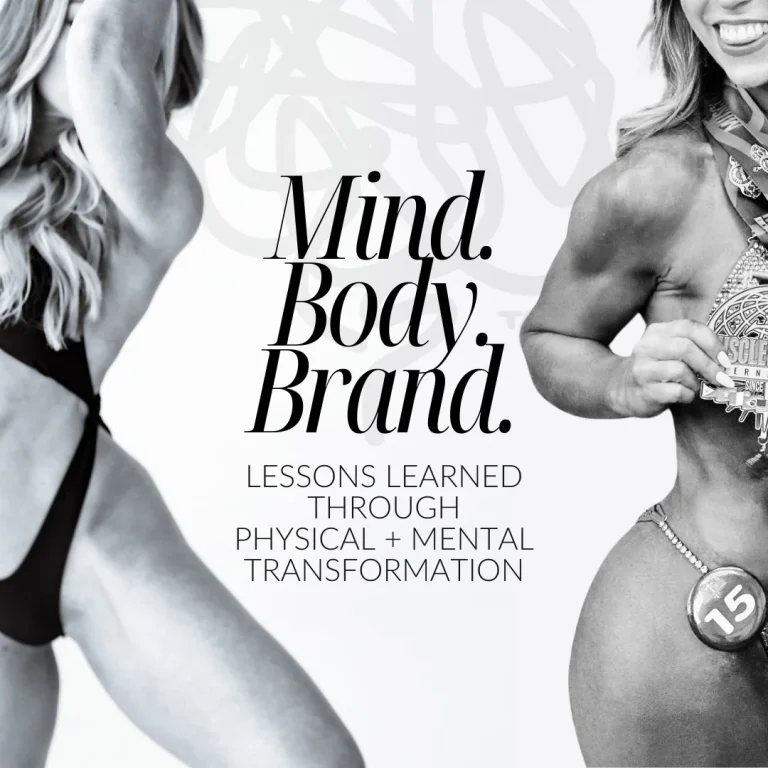
At the beginning of this year, I decided to take on a major personal challenge. One which transformed every part of me both mentally and physically. I decided to train, compete, and become a Wellness Fitness Competitor.

Within 5 very dedicated months I lost 25 lbs, gained 4% muscle mass, and lost 11% body fat, completely reshaping my physical body (I had no idea the mental changes that would accompany the physical changes, but more on that later.) For the first time in my life, I had committed to physical fitness in a way that meant something different to me. While I’ve always valued fitness, having played sports in school and genuinely enjoyed the gym, this time was different, this was a lifestyle change. I knew it would take complete and total commitment, countless sacrifices, and dedication to this wild goal of becoming and embodying a fitness competitor. My why was simple, change was the only option for me. I hit a wall of disappointment I couldn’t explain and knew that I had to take responsibility for the decisions that led me to that point. I was ready to completely rewire my behavior, create healthier habits, and stop visualizing the person I knew I was capable of being and actually become her.

This article isn’t a humble brag or to say that I’m special in any way for this accomplishment. Many people have transformations like this and ones much much bigger than mine, whether they end up competing or not.


What this article is about is the power of your mind and body working in unison to build the person (and brand) you want to become.

Building is building. It takes dedication, discipline, consistency, and more to create [insert goal/desire/legacy here]. This journey empowered me, gave me confidence I never imagined possible (something only posing on stage in a rhinestone bathing suit can give you), and created a mind/body/brand connection for me in business that I felt (you guessed it) empowered to share with others.

When we set our focus on something, whether it’s considered a personal or professional goal, it becomes personal to each of us. We take ownership of that goal until we achieve it, for ourselves, the teams we’re a part of, or the people/clients/customers we serve. There’s a depth to each goal, an extreme, that at the time may seem unattainable (like having a medal placed around your neck on stage). Truth is nothing is unattainable, it’s simply a sliding scale of what you classify as achievement. How far you want to push yourself, and your business, to be the best version possible while maintaining life balance. That’s success, that’s finding happiness, that’s living in alignment with your purpose. No one else’s, yours. When you own and take responsibility for progress, everything changes.

This rollercoaster experience gave me many valuable insights but for the sake of brevity, I condensed it down to these (4) in hopes of sharing the connection I found during my “progress” between the life lesson and application in business.   

Discipline and Self-Control

Lesson:

Without these two, you will fall victim to every temptation, every opportunity that isn’t for you, and everyone else’s opinion of you, what you should do, and who you are. These two are the stepping stones to every goal we want to achieve. They help you stay aligned with your purpose, drive consistent change through intentional decision-making, and create the consistency you need to see progress and enjoy the reward.      

Application:

In business, we say yes more than no because yes usually means money now whereas no means holding out for future money and a potentially better fit. Yes can be a decision out of fear of letting others down, not knowing where your next dollar is coming from, or simply having the time so why not. But no comes out of clarity, knowing what you do and who you serve, and having the confidence and patience to trust in what you attract. Having the discipline and self-control to say no creates structure around your brand allowing others to learn who you are and what you do so that you can attract the people that truly need you. 


Overcoming assumed boundaries

Lesson:

I hit many “roadblocks” over the last 5 months, some more “emotionally bruising” than others. I would entertain the idea of failure, wrestle with an unnecessarily negative internal dialogue, and lean into the fear of letting myself down. Thanks to my trusted support group (highly recommend this for any goal you wish to achieve) each time I hit one, I was reminded that sometimes roadblocks are just opportunities for a detour, to reframe my thinking or change my approach. Assuming boundaries for yourself is natural but learning how to overcome them is an absolute necessity for growth.

Application:

We sometimes get lost thinking about the competition, what they’re doing, what they’re selling, and how they’re looking. The truth is it doesn’t matter because you can only “be you,” anything else is an off brand copy. Competition can create boundaries for us if we’re busy following their lead. If we choose to lead, then we end up creating the best path for ourselves, unphased by the competition and whatever boundaries they hold themselves to. Learn how to lead your brand so other people’s boundaries don’t stop you from achieving your goals.  


Control what you can and let go of the rest

Lesson:

We can fully reset every 24 hours. Some days are better than others, work weighs on you, you don’t sleep that well, or maybe social distractions get the best of you, but you rest and reset the next day. Your choices, efforts, and commitments are within your control, everything else is a response. Learning to filter the rest through what you can control is powerful. Create a filtering system for what matters most to you and your goals; trust me, it minimizes the stress of previously difficult “in the moment” decisions.

Application:

Markets shift, customer needs change, and idk pandemics happen, but all of those things have two things in common, 1) they are outside of your control and 2) they are opportunities for creative change. If we spend too much time thinking about things we can’t control, we waste valuable time on building solutions that best fit us, our teams, customers, and ourselves. The faster we learn to accept what’s happening around us, the faster we can pivot and leverage the opportunity for growth that’s ahead of us.  


The power of the “1% better” rule

Lesson:

We have James Clear to thank for this one and his book Atomic Habits, where he discusses the power of tiny changes and says “If you can get 1 percent better each day for one year, you’ll end up thirty-seven times better by the time you’re done.” That’s pretty great odds if you ask me. While I still have the rest of ‘24 to go, I definitely lived this rule during my training. 1% is such a small number but over time consistently choosing something that’s 1% better or doing something that’s 1% in the direction of our goals, compounds the possibility of actually achieving them.   

Application:

Businesses and brands ebb and flow just like we do. Some days they miss the mark, experience growing pains, and have identity crises, but that doesn’t mean all progress is lost. As long as you’re consistently working towards clarity within your brand and how to best serve others through your brand, you’re using the 1% better rule to your advantage. Progress no matter how small, is still progress. It’s you choosing the history you want to have lived.  

The connection between who we are as individuals and how we show up in our professional lives is undeniable. If we build strong, healthy relationships with ourselves, we in turn do the same in business. If we value consistency, respect discipline, invest in our future, honor the learning, and trust the process, which leads to stronger teams, loyal customers, and more genuine brands. Each person contributes to the bigger picture. 

This experience transformed the way I see myself and my goals. I found strength when it seemed there was none left. I invested in myself and got back 10 fold of what I could’ve ever expected. I’ll close with a few of my favorite one-line pep talks I frequently repeated to myself throughout my training. Whether on a treadmill or at a desk, these will apply. I hope they give you the same twinge of motivation they gave me to become what deep down is always possible.   

“I will not be outworked. Smarter or harder, I will beat the person I was yesterday.”

“There is the body/mind you’re given and there is the body/mind you build.”

“If you accept less for yourself you’ll always want more. If you strive for more, you’ll end up wanting less.”  

“There are no shortcuts. You want something, show up, and achieve it.” 

“Everything is uncomfortable. Choose a discomfort that makes you better.”  

Branding and marketing have long been intertwined. Often interchangeable and sorely misunderstood, branding is about the feeling you create within your audience’s mind and the strategy you build to support that feeling, whereas marketing is how you grow that feeling through tactics and measurable outcomes. The brand is the show and marketing is the promoter. They coexist to support each other but they are not the same.

For companies that understand this and do this well, branding comes first with marketing and sales as a necessary second. They use their brand to influence their audience, empower their teams, and build an experience before focusing on sales. Marketing without branding is the same as selling out a show only to have the performer never show up. I’m sure we’d all be a little frustrated with that outcome.

So how do we fix this? How do brands use influence to increase and better support their marketing efforts? We have to take a different approach to marketing and learn how to scale through our expertise and our brand’s core value. Think impact before impressions.

One of the best ways I’ve heard this explained was by none other than Marty Neumeier, author of The Brand Gap, Metaskills, and many more branding must-reads, who said “Mattering is the new marketing.” Brands are no longer leading the charge through product and service offerings, it’s the customers who are leading the way and setting the expectations. How they feel, build trust-based relationships, and shape their identities through brands, means everything. 

If mattering is the new marketing, then how do brands matter more to their customers? 

There are 3 major ways brand influence can make your marketing matter to your customers. 

With oversaturated markets, access to just about anything you can imagine, and price ranges galore, people are no longer swayed by products or services alone, they want something that matters, to them and their communities. You have to understand your business (and brand) model and know where all the touchpoints for opportunity are so you can infuse brand value into your marketing and sales efforts. Every potential buyer needs to believe in what you are before investing their time and seal of purchasing approval in your brand.

So, before you spend countless hours and dollars on traditional marketing methodologies, consider these 3* ways you can push the boundaries of your brand’s influence to matter more in your marketing, building brand fans for years to come.

*For more ways you can drive influence and impact through your brand, download this quick read of an ebook “Transforming Brand Perception: 7 Actions to Change the Way People See Your Brand.”  

In the previous article, we discussed how neuroplasticity allows us to adapt to experiences and shape our memories from momentary emotional events. We also covered the release of dopamine and serotonin, and how we associate feelings of pleasure, joy, and excitement with positive brand experiences. When these two events combine (hormone release through a new experience) our brains are inspired to create new neural pathways and form positive memories. This memory recall bank is exactly where every brand wants to be, truly what they mean by a top-of-mind brand.

When brands make it here, they become love brands. What better to illustrate what that means than through understanding how our brains use Oxytocin. 

Oxytocin, often referred to as the “love or bonding hormone,” is a major player in social bonding, trust building, and encouraging emotional connection between people. This connection-inducing neurochemical is released during positive social and pro-social interactions, increasing our ability to feel close, be kind and supportive to others, and make a particular event more memorable and meaningful. Oxytocin influences our social behaviors and empathy toward others, making it a crucial element in both building and maintaining meaningful relationships. Whether these relationships are with other individuals, personal or professional, or brands, Oxytocin is responsible for bringing people together and interpreting meaningful experiences for us on a fundamental level.   

In this final part of the series, we’ll cover the power of creating brand bonds and discuss the science behind why and how we fall in love with certain brands. 

Let’s start with brand bonding and why we need it. Brands, like people, need an emotional connection to survive. Through this attachment, we build loyalty towards them that goes beyond brand awareness and into deep emotional need, meaning, and value. Brand bonding occurs when our people (internal teams and our audiences) attach feelings of trust, understanding, and care to a brand. This emotionally-driven connection then becomes a powerful driver in customer decision-making behavior, inspiring long-term brand affinity, and ultimately impacting the longevity of a brand. Our ability to release Oxytocin during these emotionally charged events plays a major role in who choose and how we create bonds. 

Below are some ways brands can harness the power of oxytocin during brand events to create more meaningful and memorable experiences for their audience.

Brand experiences are complex. They require strategy, consistency, structure, and full emotional buy-in from the people who uphold them. It’s clear that dopamine, serotonin, and oxytocin invite us to explore the fullness of what each “life” experience has to offer in a pleasurable and genuine way. When brands are successful at consistently living up to their promises, we support them by making positive associations in our minds by rewarding them with a cozy spot in our long-term memory. 

I want to close this series by saying the secret ingredient to any successful brand is authenticity. Being true to who you are and genuine in your efforts is the only way to build and sustain lasting relationships with your audience. Brands should never manipulate emotions solely for marketing purposes as it will hurt your brand’s effectiveness, reputation, and morals in the long run.

The goal is to foster authentic and aligned emotional connections that lead to a more loyal, engaged, and valued customer base. When you do that, people will find, support, and grow with your brand.

I’d like to thank the following sources for inspiring this series:

The Huberman Podcast with Andrew Huberman and his many guests

Making Sense with Sam Harris

Dopamine Nation: Finding Balance in the Age of Indulgence by Dr. Anna Lembke

National Geographic

Harvard Business Review

Psychology Today

In the first part of this series, we discussed dopamine and serotonin and how brands can promote these happy, pleasure-based hormones within their brand experiences. While it’s necessary to understand and promote the release of dopamine and serotonin, you also have to think about what happens after it’s released. After the happy hormone dust settles, where do these experiences get filed in the minds of those who experience them? In order for people to keep coming back, they have to connect their positive emotional event to something meaningful and worth storing in their memory bank of learned experiences. Our brain’s plasticity is responsible for adjusting to these momentary events and creating pattern-based memories through neuroplasticity. 

Neuroplasticity plays a crucial role in how we respond to brand experiences, commit them to memory, and develop learned behaviors. Our brain’s ability to adapt and change in response to experiences is directly related to our ability to form new neural patterns and networks, allowing us to either commit an experience to memory or pass it off as a momentary event. We do this continuously as we evolve and learn throughout our entire life, shaping the way we remember the individual stories that make up our lives.

Part two of this series is all about neuroplasticity and how our brains allow us to change in response to experiences, new learning events, and environmental influences. Strong emotions like fear, surprise, and joy, can make an experience more impressionable, giving brands an opportunity to impact how others interact with and engage in memory recall after those events. If the experience is repeated enough, the neural pathway forms and commits the pattern to long-term memory, making consistency the number one factor in the reinforcement of learning during experiences. What this tells us is that brands have to set and continue to match the expectations of their audiences in order to make an impression that lasts.

Below are some ways we can better understand the role of neuroplasticity as it relates to brand influence.

Neuroplasticity is the fundamental system contributing to our capacity to process, understand, and respond to experiences. Whether those are life experiences, learned experiences, or brand experiences, we commit them to memory all the same. When we understand (even at a basic level) how neuroplasticity works, we can design positive brand experiences that leave a lasting impression and actively shape brand perception within our audiences’ minds over time. 

Next, we’ll round out the series with Oxytocin, the brain chemical responsible for love and social connection. 

We are designed to crave experiences. We spend our lives shaping our brains into masterful tools for understanding our desires, motivations, and meaning as it applies to our chosen interests, relationships with others, and the decisions we make. We observe, test, create, and learn new things all to experience satisfaction on some level; it’s simply part of our human nature. In this 3-part series, I’ll go through the science behind great brand experiences, why we love or hate them, and why we become attached and loyal to certain brands. 

You’ve likely heard of the “happy hormones” before, yes? Maybe not referred to in that exact way but these brain chemicals: Dopamine, Serotonin, and Oxytocin are responsible for influencing our mood and well-being, inspiring connection, boosting attentiveness and excitement, and feeling love. These messenger hormones are tied to experiences that we either create ourselves or participate in like physical activity, social interactions, listening to music, or any self-gratifying activity we choose to enjoy. Any time we experience pleasure, reward, a boost of energy, or an excitable moment of joy, we are firing up these neurotransmitters and forming connections in our brains that we use as markers to remember positive experiences. 

The key factor here is if we understand what makes us (and our audiences) happy, we can create brand experiences that match, creating a scientifically backed association between what we do and positive pleasure and reward feelings in others. While this may seem like an effort to manipulate market interest, it’s actually in support of learning how to create wildly entertaining, engaging, and memorable brand experiences that others enjoy. When you focus on creating a great experience, the less you have to worry about selling or explaining what you do; the experience sells itself and you end up with happier people and a loyal following.

For the first part of the series, we’ll focus on Dopamine and Serotonin specifically and how they impact the way we experience brands. 

Let’s start with a quick explanation of what dopamine and serotonin are and what they are responsible for …

Dopamine is both a neurotransmitter (aka a messenger) and a hormone. It is responsible for heightening our senses during peak moments of stress or pleasure, grabbing our attention, and aiding us in interpreting our emotional responses to any given experience. The level of dopamine we release ultimately controls how we feel, how we’re motivated, and how we maintain emotional balance in our lives. 

Serotonin is similar, as it is both a neurotransmitter and a hormone; however, it is produced in both the brain and the intestines. It is responsible for maintaining our mood and emotional regulation as well as providing us with sound sleep and overall gut health. The levels of serotonin we release in our bodies directly influence our ability to feel happiness, calmness, and satisfaction in our lives.

Even with this cliff notes style summary of dopamine and serotonin, I’m sure you can see the cause-and-effect relationship that forms between our external experiences and how our brains process them.

So how does this cause-and-effect relationship tie into our interest and ability to experience brands?

Smart brands start with a strong foundation built on their purpose, values, principles, and audience aims. In defining these key brand goals (and many others) up front, they’re able to determine who they are, how they fit in the market and collectively embody the personality (or archetype) that will best resonate with their audience and deliver an experience that matches. 

If you study the behavior of your audience and understand their tendencies and interests, then you can create a brand experience that satisfies their happy hormonal makeup. When experiences positively influence our neurological responses, we lean towards brand loyalty and develop preferences for one brand over another in a similar space. Brands can do this by testing and studying their audience’s behavior through various customer experience touchpoints, experiential marketing techniques, and many other sensory-driven experiences.

Determining how they perceive brands, what they enjoy, and ultimately how they want to be engaged, says a lot about the type of experience a brand should be delivering. The more you know about your audience, the more opportunity you have to reach and leave your mark on them.

Here are three potential ways brands can leverage an understanding of dopamine and serotonin to create impactful brand experiences:

These strategies are not intended to manipulate or misguide audiences and should be implemented ethically and genuinely. Attempting to manipulate brain chemicals solely for marketing purposes without delivering authentic value to others can lead to backlash, a damaged brand reputation, and not to mention, the moral ickiness that comes with it. It’s incredibly exhausting trying to be something you’re not, so it’s best to focus on authentically connecting who you are with your chosen strategy.

The goal should be to create meaningful and positive experiences that resonate with your target audience on a deeper level. In order to do that, we need to spend some time understanding the science behind what inspires a person to enjoy certain brand experiences before just creating them. Focusing on what brings them joy, happiness, and excitement is without a doubt a great place to start. 

The legendary brand icon that is Barbie, is definitely having a moment right now. With the success of the Barbie movie bringing this brand to life and giving meaning to her symbolic existence, Barbie has been redefined, transformed, and has become oh-so human-like in her realizations about identity. As an audience member, one may even begin to question their dreams, their need for answers, and ultimately their identity all in part to share in her awareness for maintaining expectations (me I’m the one). 

As a branding pro, I watched Mattel®️ masterfully redefine the legendary brand’s story and cross over into a highly relatable and relevant new identity story about how we process our social reality. I couldn’t help but think of the brand experience I was having and the level of depth they could bring to this larger-than-life brand icon story. 

So without giving too much away, what did the Barbie movie do to bring to life its iconic brand?

Barbie truly is one of the most recognizable and personified brands ever created with a legacy that continues with each new wave of young girls drawn to her ideal image. As long as little girls everywhere continue to play pretend and imagine their pink dreamy worlds, Barbie will live on. In fact, I love to watch my nieces play with the new and improved Barbies of today, all their accessories, new career paths, and creative backstories. Barbie (and Mattel®️) knew how to create a toy that was accessible and admirable to little girls everywhere. Barbie gives them something to project their dreams and aspirations onto in a way that makes them feel like anything is possible. 

While this movie may not be considered a “kids movie” (definitely some more adult-friendly one-liners in there), it definitely mends the ideals of every woman that was once a little girl with big dreams in the audience. Nostalgia, identity, and a story about transformation is all Barbie needed to reshape the narrative around the underlying expectations of beauty and empowerment through her legacy as a meaningful, iconic, and truly immortal brand. 

Source art link: Shawn Mansfield Art